
Spain offers more than sunshine and historic cities. For many international workers, it offers a practical route to employment in sectors that need labour, technical skill, and long-term talent.
Hospitality, tourism, agriculture, logistics, construction, healthcare, manufacturing, IT, and skilled trades all create opportunities across the country. Yet for non-EU nationals, the job offer is only one part of the journey. Before legal employment can begin, the correct work authorisation and residence visa must be in place.
This guide explains how the Spain work permit and employment visa process works, what documents applicants usually need, and how to avoid delays. It is written for general information only and should not be treated as legal advice. Immigration rules can change, and each case should be checked against current requirements.

Who needs a work permit to work in Spain
Spain is part of the European Union, which means the rules differ depending on nationality.
Citizens of EU countries, European Economic Area countries, and Switzerland generally do not need a Spanish work visa to take employment in Spain. They may still need to complete registration steps if they stay for a longer period, but they do not go through the same work authorisation process as most non-EU nationals.
Non-EU nationals usually need work authorisation before they can begin paid employment. In many cases, they also need a residence visa issued by a Spanish consulate before travelling to Spain for work.
The key point is simple: a person should not assume that a job offer alone grants the right to work. Spain separates the employment decision from the immigration permission. Both must be handled correctly.
Common routes for non-EU workers
The right route depends on the job, the employer, the worker’s profile, and the expected length of employment. Common options include:
| Route | Typical use | Main feature |
| Employee work and residence authorisation | Standard hired employment with a Spanish employer | Usually linked to a specific job and employer |
| Highly qualified professional permit | Specialist, managerial, technical, or advanced professional roles | Often used for skilled roles with qualifying conditions |
| EU Blue Card | Qualified employment for eligible non-EU professionals | Designed for highly skilled workers meeting salary and qualification rules |
| Seasonal work authorisation | Agriculture, tourism, or short-term labour needs | Temporary and tied to seasonal employment |
| Intra-company transfer | Employees moving within the same company group | Used when a worker transfers to a Spanish branch or entity |
| Self-employed work authorisation | Independent business or freelance activity | Requires a viable business or professional activity plan |
Each route has its own evidence requirements. A skilled tradesperson, hotel worker, nurse, software developer, farm worker, and logistics employee may all need different documentation, even if each person plans to work legally in Spain.
How the employment visa process usually works
The process is often shared between the employer and the worker. The employer normally begins the work authorisation stage in Spain, while the worker later completes the visa stage through the Spanish consulate in their country of residence.
The order matters. Applying in the wrong sequence can lead to refusal, delay, or the need to restart.
The employer prepares the job side
For many employee work permits, the Spanish employer must show that the job is genuine and that the employment conditions meet legal standards. This can include details of the role, salary, contract, working hours, and business activity.
In some standard employment cases, Spanish labour market rules may apply. That means the employer may need to show that the position can be offered to a non-EU worker under the relevant conditions. Some workers may be exempt from parts of this requirement, and some occupations may receive different treatment depending on Spain’s labour needs.
This is one reason the correct permit category matters. A role in IT, healthcare, construction, or agriculture may not be assessed in the same way as another position.
The work authorisation is submitted in Spain
The employer, or an authorised representative, usually submits the work and residence authorisation application to the relevant Spanish authority. The worker may need to provide documents at this stage, but the employer often carries the formal submission for hired employment routes.
If the authorisation is approved, the worker can move to the visa stage. Approval of the authorisation does not always mean the worker can immediately travel and start working. The visa process still has to be completed where required.
The worker applies for the visa
Once the authorisation is granted, the worker applies for the relevant employment visa through the Spanish consulate or visa office that handles their place of legal residence.
This stage usually involves submitting identity documents, forms, passport photos, the work authorisation decision, and supporting personal documents. The consulate may also request originals, translations, legalisation, or apostille depending on the document and country of issue.
After the visa is issued, the worker can travel to Spain within the visa validity period.
The worker completes arrival formalities in Spain
After arrival, workers staying long term normally need to complete local immigration and residence steps. This may include applying for a Foreigner Identity Card, often referred to as the TIE, and obtaining or confirming a foreigner identity number, known as the NIE.
Workers may also need to deal with address registration, social security registration, and healthcare access, depending on their employment and residence situation.
Documents international workers should prepare early
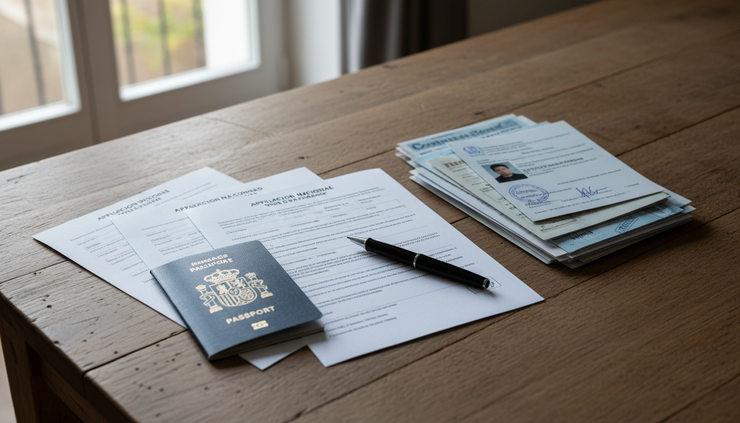
Document problems are one of the most common causes of delay. Some papers take time to issue, translate, or legalise. Starting early gives both the employer and worker more room to fix errors.
The exact list depends on the permit route and consulate, but applicants commonly need:
- A valid passport with enough remaining validity
- Completed visa application form
- Recent passport-size photographs
- Job offer or signed employment contract
- Work and residence authorisation approval, where applicable
- Proof of qualifications or professional experience
- Police clearance certificate from relevant countries
- Medical certificate, if required for the visa type
- Proof of accommodation or address details, where requested
- Evidence of professional licence or registration for regulated jobs
- Translated and legalised documents, where required
- Visa fee payment confirmation, if applicable
Passport and identity documents
The passport should be valid, undamaged, and consistent with all other records. Name spelling must match across documents. Even small differences in spacing, initials, or order of names can create questions.
If a person has changed their name, they may need supporting documents such as a marriage certificate, divorce certificate, or legal name change record.
Qualifications and professional licences
For roles in healthcare, engineering, education, and certain technical fields, qualifications may need formal recognition or proof of professional registration. A degree certificate alone may not be enough if the job is regulated in Spain.
Skilled trades can also require evidence of training, certificates, or documented work experience. For example, an employer hiring for construction, electrical work, or specialised manufacturing may need to show that the worker has the right background for the role.
Police clearance and medical certificates
Many visa applications require a criminal record certificate from the country of residence and sometimes from other countries where the applicant has lived. These certificates often need to be recent.
Medical certificates may also be required, particularly for long-stay visas. The wording can matter, so applicants should check the consulate’s current format before visiting a medical provider.
Translation and legalisation
Spain often requires foreign public documents to be legalised or apostilled, unless an exemption applies. Documents may also need a sworn translation into Spanish.
This step should not be left until the end. Apostilles, embassy legalisation, and sworn translations can take time, especially during holiday periods or high-demand seasons.
Sectors with strong international worker demand
Spain’s labour market is broad. Demand changes by region and season, but several sectors commonly attract international workers.
Hospitality and tourism
Hotels, restaurants, resorts, event venues, and travel services often need staff, especially during peak travel seasons. Roles can include kitchen staff, cleaners, wait staff, reception staff, drivers, maintenance workers, and supervisors.
Seasonality matters here. Some jobs may be short term, while others can lead to longer contracts. The visa route should match the employment length and conditions.
Agriculture and food production
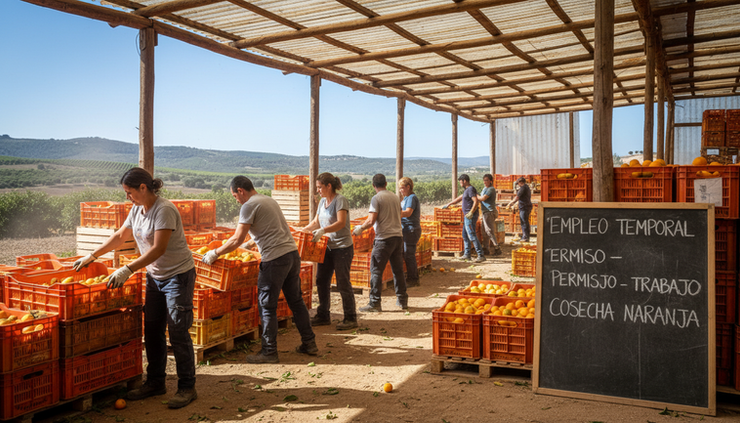
Spain has regular demand for workers in planting, harvesting, packing, and food processing. Seasonal authorisations may be used for temporary agricultural work, especially where employers need labour for defined periods.
Workers should check the exact terms of the contract, including accommodation, transport, working hours, pay, and return arrangements if the role is temporary.
Logistics and transport
Warehousing, delivery coordination, freight handling, cold-chain operations, and transport support roles can create opportunities for international workers. Some roles require specific driving licences, safety training, or machine operation certificates.
Where a role involves regulated driving or heavy equipment, documents may need additional checks.
Construction and skilled trades
Spain’s construction sector may need workers in carpentry, plumbing, electrical installation, masonry, welding, site support, and maintenance. Skilled trades applicants should prepare proof of experience, training, and safety knowledge.
Employers may also need to show that the role matches the worker’s skills and that the terms comply with Spanish employment rules.
Healthcare and care work
Healthcare roles can involve stricter checks because patient safety and professional regulation are involved. Doctors, nurses, pharmacists, therapists, and other regulated professionals may need qualification recognition and registration with the relevant body.
Care work may also require language ability, training evidence, and a clear understanding of local employment standards.
IT and technical roles
Software development, cybersecurity, data roles, systems administration, engineering, and technical support can fall under skilled work routes if the role and applicant meet the conditions. Highly qualified professional permits or similar routes may be suitable in some cases.
For these roles, employers often need clear job descriptions and evidence that the worker’s qualifications or experience match the position.
How to avoid delays and refusals
A strong application is not just a pile of documents. It needs consistency, timing, and the right category from the start.
Match the visa route to the real job
The job title, contract, salary, qualifications, and permit category should tell the same story. A mismatch can cause problems. For example, a technical specialist application should not contain a vague job description that sounds like general office support.
The same principle applies to temporary work. A seasonal job should have a clear time frame and terms that match the seasonal route.
Check consulate rules before collecting documents
Spanish consulates may have different appointment systems and document presentation rules. One office may request copies in a certain order. Another may require specific wording on a medical certificate.
Applicants should check the consulate that handles their legal place of residence, not a random consulate website from another country.
Keep dates realistic
Police certificates, medical documents, job start dates, and visa appointments all have timing limits. If a job is meant to start too soon, the worker may not have enough time to complete the visa process legally.
Employers should plan recruitment with immigration timing in mind. Workers should avoid resigning from a current job, booking non-refundable travel, or relocating before the visa is issued.
Make translations and legalisation part of the plan
A document that is correct in the original language may still be unusable if it lacks the required apostille, legalisation, or sworn translation.
A practical document plan should answer three questions:
- Which documents need legalisation or apostille?
- Which documents need sworn Spanish translation?
- Which documents must be recent at the time of submission?
Keep copies of everything
Workers should keep digital and paper copies of every submitted form, receipt, approval letter, passport page, certificate, and translation. These records may help during arrival procedures, renewals, job changes, or future residence applications.

How Red Maple can help with the Spain work permit process
The Spanish immigration process can feel confusing because several parties are involved. The employer, worker, Spanish immigration office, consulate, translator, and local authorities may all play a part.
Red Maple can help applicants and employers prepare with a clearer process. Support may include identifying the suitable visa route, reviewing document requirements, checking application readiness, and helping workers understand each stage before they move forward.
Good guidance does not replace official decisions by Spanish authorities. It does help reduce avoidable mistakes, especially when documents come from different countries or the worker’s role falls into a specialised category.
A well-prepared case usually has:
- A clear job offer that matches the permit route
- Consistent personal and employment documents
- Valid translations and legalisation where needed
- Realistic timing for authorisation, visa, travel, and arrival steps
- A plan for post-arrival residence formalities
For international workers, preparation is the difference between chasing missing paperwork and moving through the process with confidence. For employers, it protects recruitment plans and helps ensure the worker can start legally.
Spain continues to offer real work and residence opportunities for non-EU nationals across many industries. The safest path is to choose the correct authorisation, prepare documents early, follow the proper order, and avoid starting work until permission is in place.
With the right planning, a job offer in Spain can become a legal, organised move rather than a stressful paperwork race.