

Working in Malta can be a smart move, but the paperwork comes first. For most people from outside the European Union, European Economic Area, and Switzerland, a job offer alone is not enough. Malta usually requires the right residence and employment authorisation before work begins.
The main route is the Single Permit, handled by Identità, Malta’s government agency for immigration and residence matters, with employment checks linked to the Maltese labour authorities. It allows a non-EU national to live and work in Malta for a specific employer and role.
This guide explains how the Malta work permit process works, what documents are commonly needed, what to expect after approval, and how Red Maple can help applicants and employers avoid costly mistakes.
This article is for general information only. Immigration rules can change, and each case should be checked against current official guidance.

What a Malta work permit visa means for non-EU workers
People often use the term “work permit visa” to describe several steps at once. In Malta, these steps can include:
- Permission to work for a specific employer
- Permission to reside in Malta
- Entry clearance, if the applicant is from a country that requires a visa to enter the Schengen Area
The Single Permit is the most common option because it combines residence and employment authorisation into one process. It is not an open work permit. In most cases, it ties the worker to the employer and job listed in the application.
That means an approved permit for one job does not automatically allow a worker to change employer, change role, or start freelance work. A new or amended authorisation may be needed before any change takes place.
Who usually needs authorisation before working
A person normally needs work and residence authorisation in Malta if they are:
- A citizen of a country outside the EU, EEA, or Switzerland
- Planning to take up paid employment in Malta
- Staying beyond what a visitor status allows
- Working for a Malta-based employer or in a Malta-based role
EU, EEA, and Swiss citizens have different rules because of free movement rights. Their family members may also fall under separate routes, depending on nationality and relationship.
What the Single Permit covers
A Single Permit usually confirms that the holder may:
- Live in Malta for the approved period
- Work for the named employer
- Work in the approved position
- Access the rights attached to that residence status
The permit is usually valid for a limited time and must be renewed if the employment continues. Renewal should not be left until the last moment, as expired permission can create serious problems for both the worker and employer.
The main requirements before applying
A Malta Work Permit Visa Guide for Non EU Workers should start with one point that cannot be skipped: the job offer matters. In most employment routes, the application depends on a real position with an employer in Malta.
The employer normally plays a central role because the Maltese authorities must be satisfied that the job is genuine and that the employment conditions meet local requirements.
A valid job offer
The applicant usually needs a confirmed offer from a Maltese employer. The role, salary, duties, and working conditions should be clear and consistent across the application documents.
A vague offer can slow the process down. So can mismatched information, such as one job title on the contract and another on the application form.
Employer checks
The employer may need to show that the vacancy exists and that the employment terms are lawful. Depending on the role and category, labour market considerations may apply.
This is one reason employers should prepare early. A rushed application with missing evidence can lead to delays or refusal.
Suitable qualifications or experience
For skilled roles, the worker may need to show that they have the right background. This may include:
- Academic certificates
- Professional licences
- Training records
- Reference letters
- Proof of previous employment
Some regulated jobs may require recognition or approval from a Maltese authority before the worker can legally perform the role. Healthcare, education, financial services, and technical professions can involve extra checks.
A clean and consistent immigration history
Past overstays, refusals, or incomplete information can affect an application. These issues do not always mean the application will fail, but they should be handled carefully and honestly.
Trying to hide a previous refusal or immigration problem can cause more harm than the issue itself.
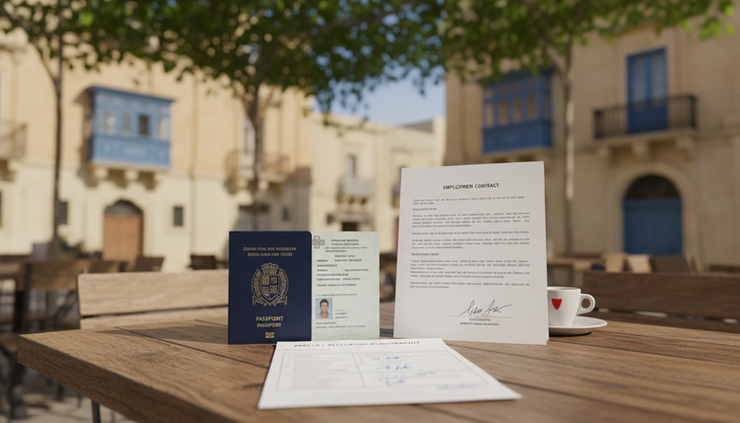
Documents commonly needed for a Malta work permit application
Exact document lists can vary by route, nationality, industry, and employer. Still, most Single Permit applications involve a core set of personal and employment documents.
A well-prepared file should be accurate, readable, and consistent. If a document is not in English or Maltese, a certified translation may be required.
Personal documents
Applicants are commonly asked for documents such as:
- Valid passport
- Passport-style photographs
- Completed application forms
- Proof of qualifications or professional experience
- Curriculum vitae
- Police conduct certificate, where required
- Health insurance or medical documents, depending on the case
- Proof of accommodation, where requested
The passport should usually be valid for long enough to cover the intended stay. If it expires soon, renewing it before the application may prevent trouble later.
Employment documents
The employer side of the file may include:
- Employment contract
- Job description
- Employer declaration or supporting forms
- Evidence that the company is properly registered
- Proof of salary and employment conditions
- Any labour market or vacancy-related evidence required for the role
The employment contract should match local requirements. It should also reflect the same role, salary, and employer details shown elsewhere in the application.
Why consistency matters
Immigration officers review the application as a whole. Small differences can raise questions.
For example, delays can happen if:
- The passport name does not match the contract name
- The salary differs across documents
- The job title changes from one form to another
- The applicant’s work history does not support the role
- Scans are unclear or incomplete
These issues may sound minor, but they can turn a straightforward case into a long exchange of requests for more information.
How the Malta Single Permit process usually works
The exact process can differ depending on whether the applicant is already lawfully in Malta or applying from abroad. The employer often initiates or supports the application, and the worker must provide personal documents and attend any required appointments.
The broad process usually follows these stages.
The employer prepares the job file
The employer confirms the role and gathers company and employment documents. This step should include checking whether the role has special conditions, salary expectations, or licensing requirements.
For roles that require professional approval, that issue should be addressed before or during the immigration process, not after arrival.
The applicant prepares personal documents
The worker gathers passport copies, qualifications, references, police records if required, and other supporting documents.
Names, dates, and job history should be checked carefully. If there is a gap in employment or study history, it is better to explain it clearly than to leave the officer guessing.
The application is submitted
The application is submitted through the relevant Malta process, usually involving Identità and employment-related assessment. The authorities may request extra information.
A request for more documents is not always a bad sign. It often means the officer needs clarification before deciding.
The applicant waits for a decision
The worker should not start working until the proper authorisation is granted. A Schengen visa or visitor entry does not normally give the right to work.
This point is especially important for applicants who can enter Malta visa-free as visitors. Being allowed to enter as a tourist is not the same as being allowed to work.
Entry and residence formalities are completed
If the application is approved, the applicant may need to complete entry steps, biometric enrolment, or residence card formalities. The exact steps depend on the applicant’s location and nationality.
The worker should keep copies of approval letters, receipts, and residence documents. These may be needed for housing, banking, renewals, or future immigration applications.

What to know after the permit is approved
Approval is a major step, but it is not the end of the process. The worker must follow the conditions attached to their permit.
The permit is linked to the job
Most Malta employment permits are tied to a specific employer and role. If the worker loses the job, resigns, or wants to move to a different employer, they should seek advice before making changes.
Working outside the approved conditions can affect future renewals and immigration status.
Renewals need planning
A Single Permit is usually issued for a fixed period. Renewal should begin early enough to allow for document collection, employer forms, and authority processing.
Common renewal documents may include updated employment evidence, proof that the worker is still employed, and valid identity documents.
Salary, address, and status changes should be kept current
Workers should keep records up to date. This may include:
- Residential address
- Passport details
- Employment details
- Marital or family status, where relevant
- Contact information
If a passport is renewed, or if the worker changes address, the Maltese authorities may need to be informed through the correct channel.
Family members may need separate permission
A work permit does not automatically give family members the right to live in Malta. Dependants may need to apply under family reunification or another eligible route.
The rules can depend on income, accommodation, relationship evidence, and the worker’s residence status. Families should plan early, especially where school enrolment, housing, and healthcare arrangements are involved.
Common reasons applications get delayed or refused
Many problems are avoidable. A strong application does not just include the right documents. It tells a clear, consistent story.
Applications can face delays or refusals because of:
- Missing signatures
- Unclear passport scans
- Mismatched job titles
- Incomplete employment contracts
- Weak proof of qualifications
- Salary or conditions that do not meet requirements
- Documents submitted in the wrong format
- Late responses to authority requests
- Previous immigration issues with no explanation
The best way to reduce these risks is to check the application before submission, not after an officer has raised concerns.
A refusal can also affect future applications. If an application is refused, the next step should be based on the refusal reason. In some cases, a fresh application with stronger evidence may be suitable. In others, advice may be needed on review or appeal options.
How Red Maple can help with a Malta work permit
Malta’s work permit system is manageable, but it has little room for careless errors. Applicants need the right documents. Employers need to meet their responsibilities. Both sides need to understand the timeline and conditions.
Red Maple can help by guiding workers and employers through the main stages of the Malta employment authorisation process.
Support may include:
- Checking eligibility for the right Malta work route
- Reviewing the employment offer and required documents
- Preparing a clear document checklist
- Helping identify missing or inconsistent information
- Supporting employer-side preparation
- Explaining what happens after submission
- Advising on renewals, job changes, and family planning where relevant
Good guidance is especially useful when the case is not simple. Examples include regulated professions, previous visa refusals, dependants, urgent employment start dates, or workers already in Malta under another status.
Final takeaway for working legally in Malta
For non-EU workers, the safest path is simple: secure a genuine job offer, prepare a complete application, wait for the correct authorisation, and follow the permit conditions after approval.
The Single Permit is the main route for many workers, but it is still a formal immigration process. Small details matter, from the wording of the contract to the validity of the passport.
A well-prepared application gives the worker and employer a better chance of moving forward without delays. If the process feels unclear, Red Maple can help make the next step more organised and less stressful.